
Is Rockwool Insulation Worth the Cost? What Most Homeowners Don't Know Before They Remodel
Most homeowners spend weeks selecting cabinetry, countertops, flooring, and lighting fixtures before beginning a remodel. Those materials deserve careful attention because they're the parts of the home you'll see every day. Yet some of the most important decisions are hidden behind drywall long before the paint goes on, and few building products have a greater influence on the comfort of a home than its insulation.
Unfortunately, insulation is one of the least understood components of residential construction. Ask most homeowners what type of insulation they have, and the answer is usually the same.
"I don't know. Whatever insulation the builder used."
That assumption is understandable because, from the outside, insulation all looks similar. Once the drywall is installed, you never see it again. But not all insulation performs the same, and choosing the right product can dramatically improve how your home feels, sounds, and performs for decades after construction is complete.
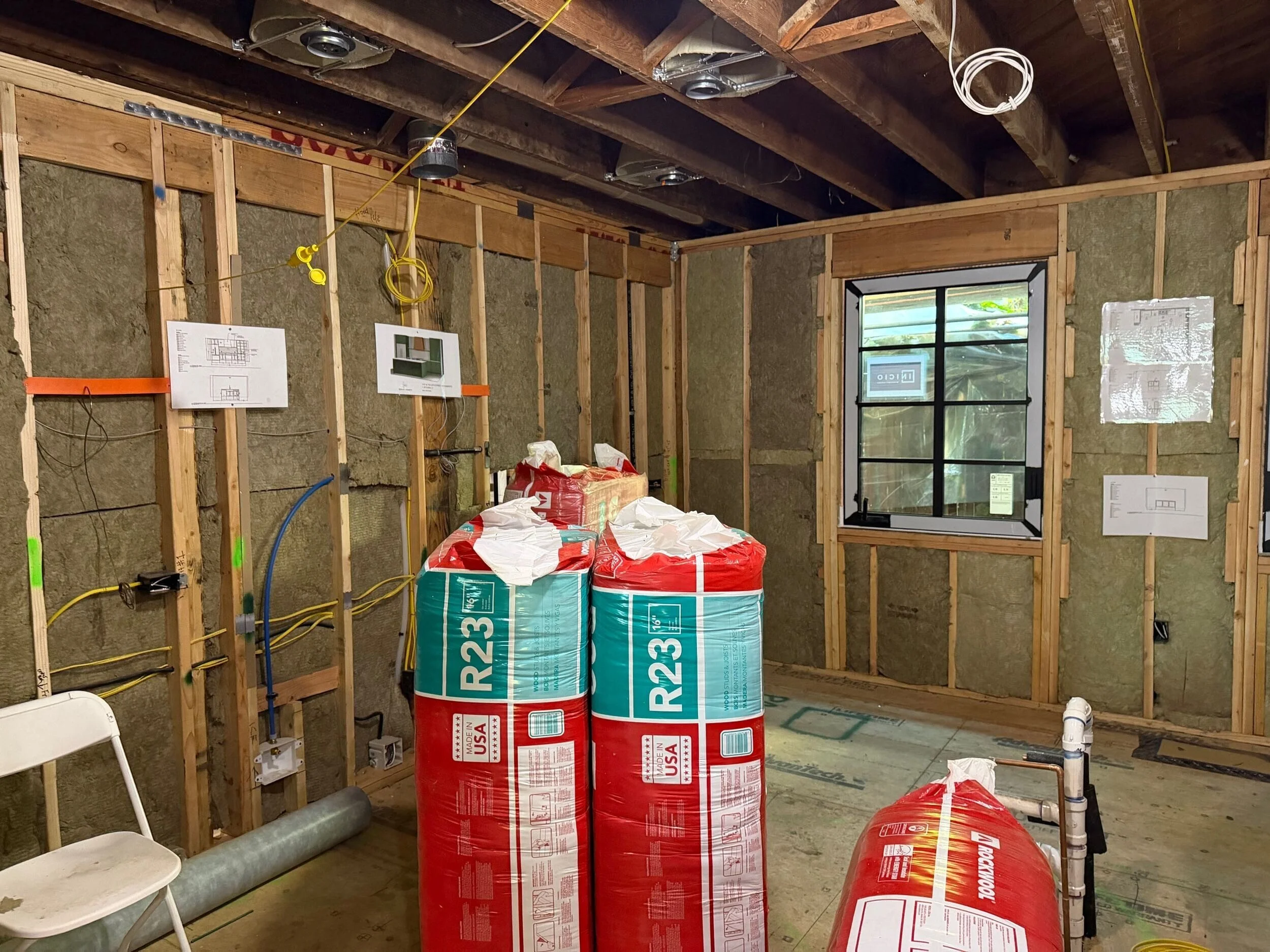
One product we're seeing specified more frequently in luxury remodels and custom homes in Granite Bay, El Dorado Hills, Loomis, Fair Oaks, Folsom, and East Sacramento is Rockwool, also known as mineral wool insulation. While it typically costs more than traditional fiberglass, many homeowners are surprised to learn that the additional investment often delivers benefits they notice every single day.
More Than Just Keeping Your Home Warm
When most people think about insulation, they think about temperature. They imagine keeping warm air inside during the winter and keeping heat out during the summer. While insulation certainly plays that role, thermal performance is only one part of the story.
A well-insulated home should also feel quieter, more comfortable, and more consistent throughout the day. Rooms shouldn't fluctuate dramatically in temperature. Interior walls should reduce noise between bedrooms, bathrooms, and living spaces. Outside traffic, lawn equipment, and neighborhood activity should fade into the background rather than becoming part of daily life.
Those qualities are difficult to appreciate until you've lived in a home that performs exceptionally well.
What Makes Rockwool Different?
Unlike fiberglass, which is manufactured from fine glass fibers, Rockwool insulation is produced by melting natural basalt rock and recycled steel slag at extremely high temperatures before spinning the material into dense mineral fibers. The finished product feels remarkably solid compared with conventional batt insulation, and that density is one of the reasons it performs so well.
Rather than simply filling wall cavities, Rockwool creates a more substantial barrier against sound transfer while maintaining excellent thermal performance. It also resists moisture, won't support mold growth, doesn't sag over time the way lower-density insulation sometimes can, and is naturally non-combustible.
For homeowners investing hundreds of thousands of dollars into a whole-home remodel or custom home, those advantages extend well beyond energy efficiency.
One of the Best Sound Upgrades You Can Make
If there's one benefit homeowners notice immediately after moving back into their home, it's the difference in sound.
Luxury homes have become increasingly open, with larger gathering spaces, taller ceilings, and fewer interior walls. While those floor plans are beautiful, they also allow sound to travel much more easily.
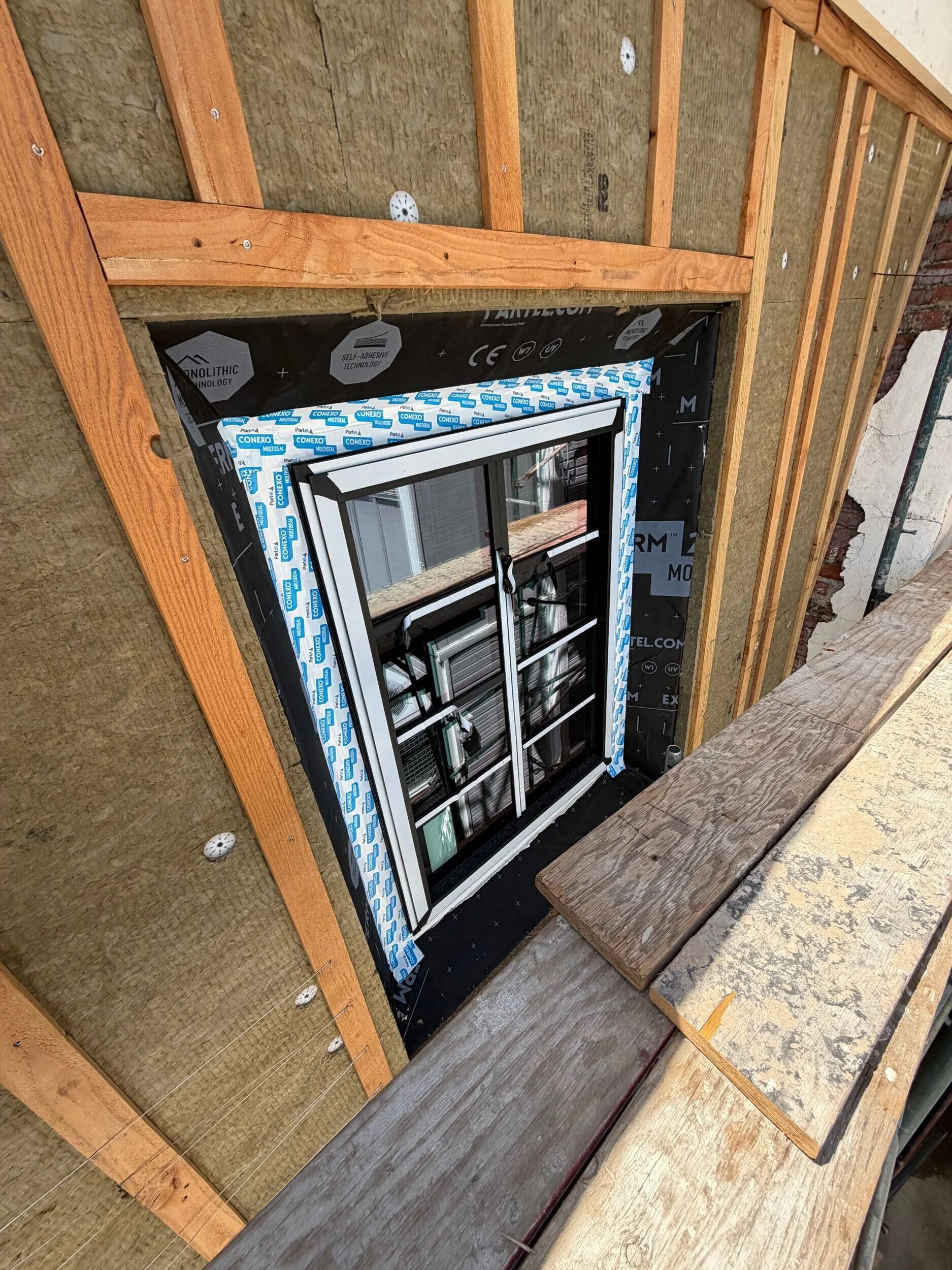
Installing Rockwool inside interior partitions can dramatically reduce noise between bedrooms, bathrooms, laundry rooms, media rooms, and home offices. Conversations become quieter. Plumbing sounds diminish. Laundry equipment becomes less noticeable. Children can sleep while the rest of the family continues enjoying the home.
For homeowners who work remotely or simply appreciate a quieter environment, this may be one of the most valuable upgrades available during remodeling.
Unlike decorative finishes, acoustic comfort is something you'll experience every single day.
A Better Option for Exterior Continuous Insulation
One advantage many homeowners have never heard of is that Rockwool can also be installed outside the structural framing.
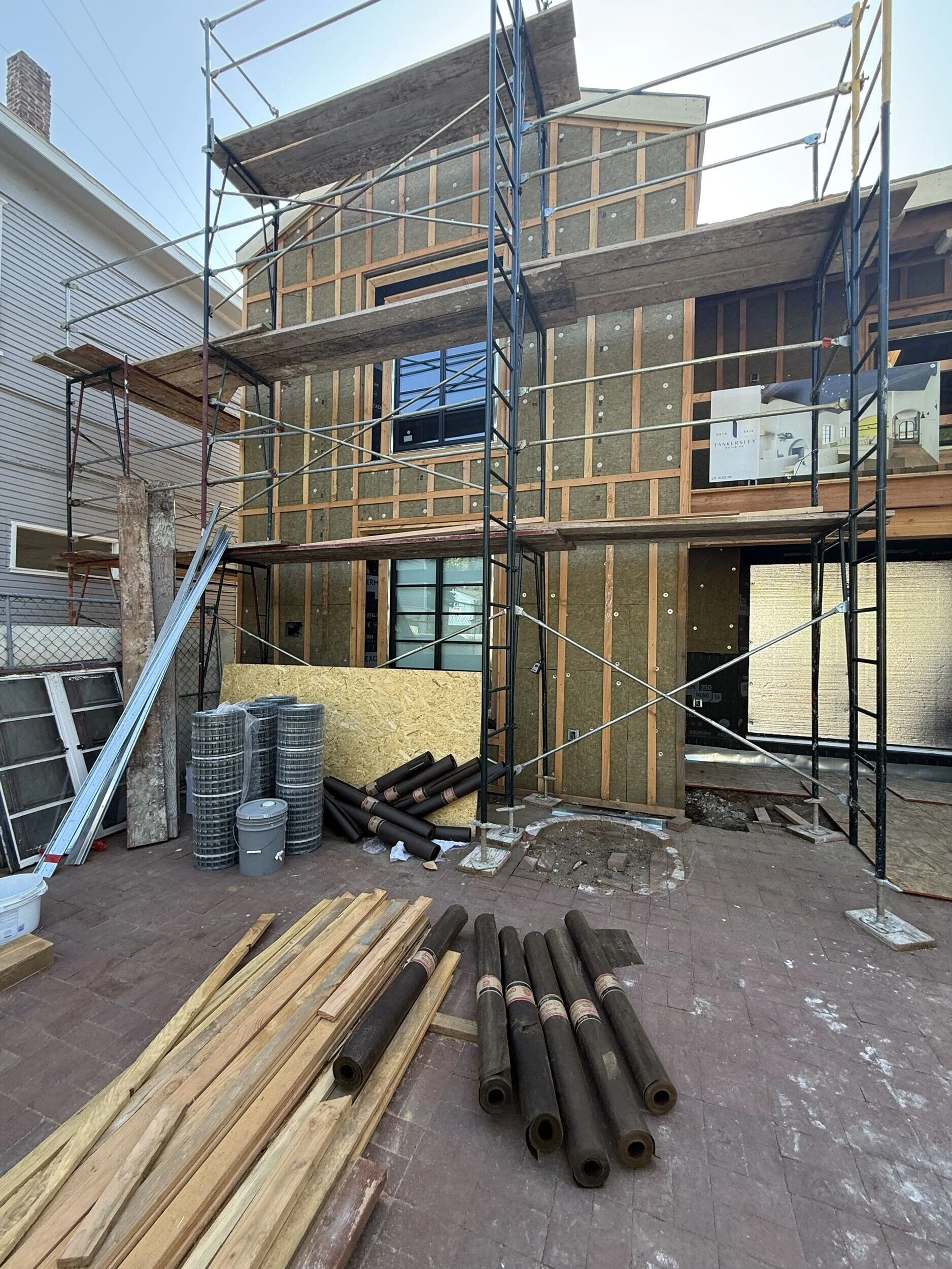
This is known as continuous exterior insulation, and it's becoming increasingly common in high-performance homes because it addresses one of the biggest weaknesses in conventional wall construction.
Wood framing itself conducts heat. Every stud in a wall creates what builders call a thermal bridge, allowing energy to move through the wall more easily than the insulated cavities between the studs. Traditional batt insulation fills only the spaces between framing members, leaving the framing itself largely uninsulated.
Installing rigid Rockwool insulation continuously over the exterior sheathing creates an uninterrupted thermal blanket around the home. Instead of heat escaping through every stud, the wall performs much more consistently, reducing energy loss while improving overall comfort.
It's one of the reasons many architects designing high-performance homes now specify continuous exterior insulation as part of the wall assembly rather than relying solely on insulation inside the framing.
Fire Resistance Is an Often-Overlooked Advantage
California homeowners are becoming increasingly aware of wildfire risk, particularly in communities bordering open space such as Granite Bay, Loomis, El Dorado Hills, and Shingle Springs.
While no insulation alone makes a home fireproof, Rockwool offers an important advantage because it is naturally non-combustible. Since it's manufactured from stone, it withstands temperatures far beyond what traditional fiberglass or foam products can tolerate without contributing fuel to a fire.
For homeowners evaluating long-term resilience, this added level of protection is another reason Rockwool has become increasingly popular in custom homes and luxury renovations.
Is It Worth the Additional Cost?
This is usually the first question homeowners ask, and the honest answer depends on the goals of the project.
Rockwool almost always costs more than conventional fiberglass insulation. Material costs are higher, and installation can take slightly longer because the product is denser and more rigid. On a typical whole-home remodel or custom home, that difference may represent several thousand dollars depending on the size of the project.
Viewed in isolation, it's easy to question whether the upgrade is worthwhile.
Viewed in the context of a $500,000, $800,000, or even $2 million renovation, however, the equation changes. Insulation represents a relatively small percentage of the total project budget while influencing comfort, acoustics, durability, and energy performance every day the home exists.
Unlike countertops or plumbing fixtures that may eventually go out of style, insulation quietly performs its job for decades without requiring maintenance or replacement.
Our Perspective
At Tankersley Build Co., we believe some of the smartest investments in a home are the ones you'll never actually see. High-performance insulation falls squarely into that category. Homeowners rarely call us years after a project to compliment the drywall or the framing hidden behind the walls, but they frequently comment on how quiet, comfortable, and solid their home feels compared with where they lived before.
Rockwool isn't the right solution for every project, and fiberglass continues to be an excellent option in many applications. The important takeaway is that insulation should never be treated as a commodity. Just because it's hidden behind drywall doesn't mean every product performs the same.
As highlighted in the annual Tankersley Remodeling Index, today's homeowners are placing greater emphasis on long-term comfort, energy efficiency, and quality of life rather than simply selecting finishes that photograph well. Choosing better insulation is one of those investments that rarely attracts attention during construction, yet it influences how your home feels every single day for decades to come.