
Why Smooth Stucco Cracks (And What We Do to Prevent It)

Drive through Granite Bay, Loomis, El Dorado Hills, or many of Sacramento's newer luxury neighborhoods, and one thing becomes immediately apparent. Traditional heavy sand-finish stucco is slowly giving way to smooth, contemporary exteriors with crisp corners, large uninterrupted wall planes, and clean architectural lines. It's a style that complements modern farmhouses, contemporary custom homes, and transitional architecture exceptionally well because it allows the proportions of the home, oversized windows, and natural materials to become the focal point rather than the texture of the exterior finish itself.
It's also one of the most misunderstood products we install.
Every year we meet homeowners who are excited about the look of smooth stucco, only to become concerned after hearing stories about cracking. Some have been told smooth stucco is a bad product. Others believe cracks are always the result of poor workmanship. Still others assume that if they spend enough money, they can build a perfectly smooth, integral-colored stucco home that will never develop a single crack.
Unfortunately, none of those assumptions are entirely true.
The reality is far less dramatic and far more interesting. Smooth stucco isn't failing when it develops hairline cracks. More often than not, it's simply revealing something that every house does naturally.
Homes move.
The House Is Moving, Not Just the Stucco
One of the biggest misconceptions in residential construction is that a completed home becomes rigid once the drywall is installed and the paint dries. In reality, a house is constantly changing. Lumber shrinks as it dries. Engineered framing expands and contracts with seasonal humidity. Roof structures respond to temperature changes throughout the day. Concrete experiences shrinkage as it cures, and foundations settle as loads are distributed into the soil. None of these conditions indicate poor construction. They're simply part of how buildings behave over time.
Stucco happens to be one of the first materials that reveals that movement.
Unlike siding systems that include overlapping joints or panelized cladding designed to accommodate movement, stucco creates one continuous surface across large sections of a home. That uninterrupted appearance is exactly what homeowners love about it, but it's also why even minor movement becomes visible. When the framing beneath the stucco moves ever so slightly, the finish has very little opportunity to absorb that stress without eventually showing a hairline crack.
This becomes even more noticeable as homeowners continue requesting larger expanses of uninterrupted wall. Contemporary architecture has moved away from decorative trim, belt courses, and architectural breaks that naturally divided wall surfaces into smaller sections. Today's luxury homes often feature broad, clean elevations with very few interruptions, which means there is simply more continuous surface where movement can become visible.
Why Smooth Stucco Shows Every Imperfection
Traditional sand-finish stucco has been used successfully for generations, partly because its texture is remarkably forgiving. The small variations within the finish scatter light and naturally disguise subtle imperfections that would otherwise attract attention. Tiny shrinkage cracks often exist, but they're hidden within the texture of the material and rarely noticed by the homeowner.
Smooth stucco behaves very differently.
Because the surface is nearly flat, light travels evenly across the wall. The same hairline crack that would disappear within a traditional finish now creates a visible shadow line that catches your eye from across the yard. Homeowners sometimes conclude that smooth stucco cracks more than traditional stucco, when in reality it's often revealing the exact same amount of normal movement. The difference isn't the performance of the material. It's the visibility of the finish.
This is especially important for homeowners planning a luxury exterior remodel, a custom home in Granite Bay, or a modern home renovation in El Dorado Hills, where smooth stucco has become one of the defining architectural features.


Integral-Colored Stucco Requires Realistic Expectations
One of the most beautiful exterior finishes available today is smooth stucco with integral color. Rather than applying paint after the stucco cures, pigment is blended directly into the finish coat, creating a rich, natural appearance with exceptional depth and consistency. It's an elegant system that eliminates concerns about peeling paint and creates an authentic finish that many homeowners prefer over traditional painted stucco.
There is, however, a tradeoff that deserves an honest conversation before construction begins.
When the stucco itself provides the finished color, there is no flexible coating over the surface capable of bridging small hairline cracks as the building moves through seasonal expansion and contraction. If a crack develops, it remains visible because you're looking directly at the finish itself.
That doesn't mean integral-colored stucco is a poor product.
It simply means homeowners need realistic expectations.
If your goal is a perfectly smooth exterior with integral color that remains completely crack-free throughout the life of the home, you're asking a cement-based product installed over a moving wood-framed structure to do something it simply wasn't designed to do.
Why Homeowners Don't Want Expansion Joints
One of the conversations we're having more frequently than ever involves control joints, sometimes referred to as expansion joints. From an engineering standpoint, they make perfect sense. These joints create predetermined locations where small amounts of movement can occur, helping relieve stress before random cracking develops elsewhere on the wall.
From an architectural standpoint, however, many homeowners dislike them.
Modern homes celebrate simplicity. Long, uninterrupted walls are part of what makes contemporary architecture so striking, and visible control joints interrupt that clean appearance. It's understandable why homeowners ask if they can simply eliminate them.
The challenge is that removing a control joint doesn't remove the movement.
It simply removes the location where that movement was intended to occur.
The wall still expands. The framing still shrinks. Seasonal changes still happen. The difference is that the building now decides where the stress will be released instead of the designer.
That's a gamble we generally don't recommend.
How We Help Minimize Cracking
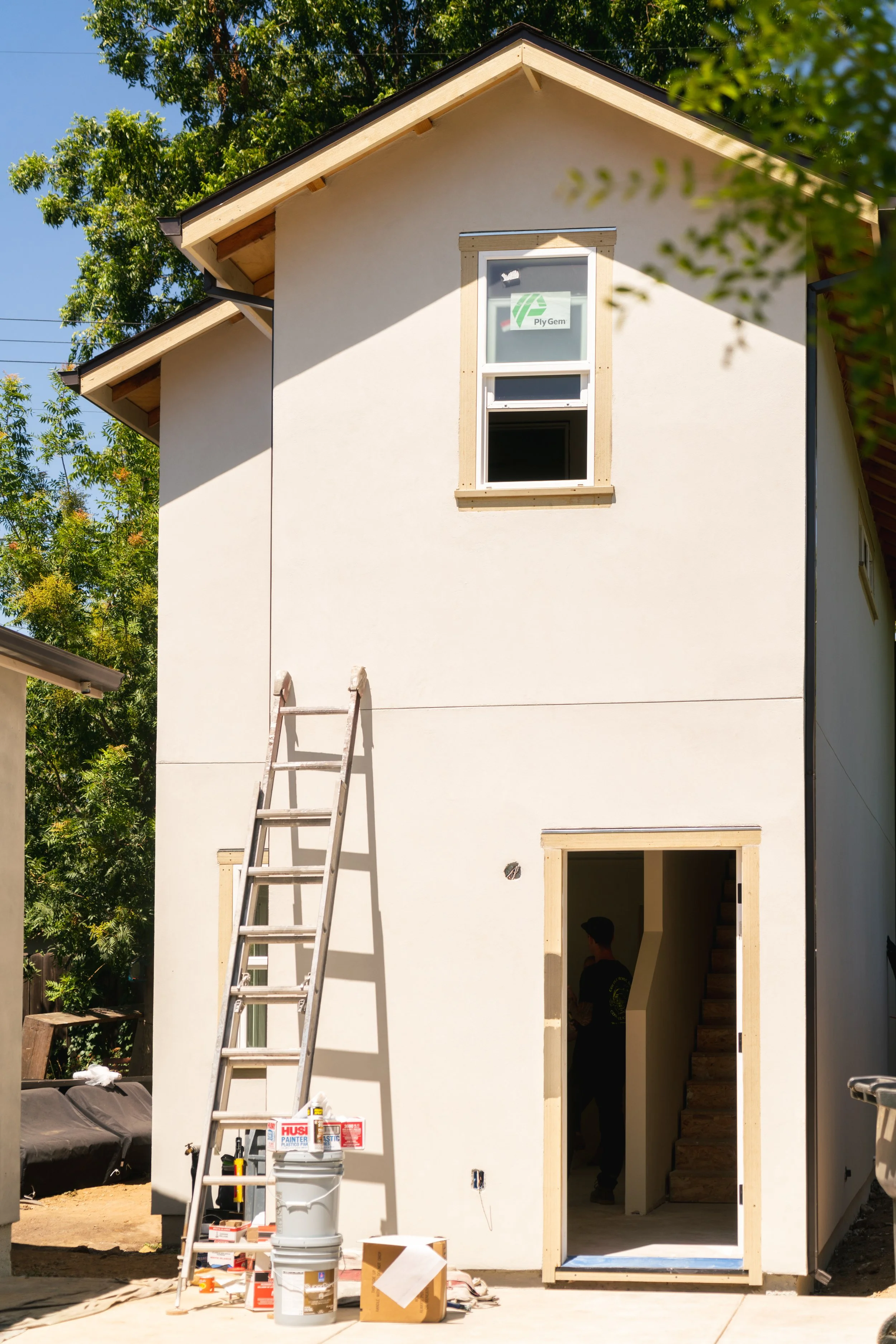
While no contractor can honestly promise a completely crack-free smooth stucco home, there are several steps that can significantly improve long-term performance without compromising the architecture.
One approach we've begun incorporating on select projects is the use of a crack isolation membrane beneath the stucco finish. Rather than allowing every small movement in the substrate to transfer directly through the finished surface, these membranes help dissipate minor stresses before they become visible. They're particularly valuable on smooth-finish projects where aesthetics are a priority and homeowners are trying to minimize the appearance of hairline cracking over time.
When a painted finish is acceptable, we also recommend a high-quality elastomeric exterior coating rather than conventional acrylic paint. Unlike standard exterior paint, elastomeric coatings remain flexible after curing, allowing the coating to stretch slightly as the building experiences normal seasonal movement. While they won't stop structural movement, they often do an excellent job of reducing the visibility of fine hairline cracks that naturally develop over the life of the home.
Equally important is everything homeowners never see. Proper weather-resistant barriers, thoughtful flashing around windows and doors, correctly installed lath, adequate curing time, quality framing, and careful sequencing all contribute to an exterior wall assembly that performs as a system rather than as individual products installed independently.
There isn't one magic product that prevents stucco cracks.
There are dozens of thoughtful decisions that collectively reduce the likelihood and severity of them.
Building Science Matters More Than Marketing
One of the reasons we enjoy writing articles like this is because they move beyond product marketing and into building science. It's easy to convince homeowners that one material is "better" than another, but construction is rarely that simple. Every material has strengths, every system has limitations, and every architectural decision involves tradeoffs.
Smooth stucco remains one of our favorite exterior finishes because few materials create the same clean, timeless appearance on a well-designed home. At the same time, we believe homeowners deserve an honest conversation about what that choice means before construction begins. Understanding how homes move, why hairline cracks develop, and what can realistically be done to minimize them leads to better decisions and far fewer surprises after the project is complete.
At Tankersley Build Co., we believe great remodeling and custom home construction begin with education. The more homeowners understand about how their homes are built, the more confident they become in the decisions they make. As we've discussed throughout the annual Tankersley Remodeling Index, today's luxury homeowners are placing greater emphasis on long-term durability, thoughtful detailing, and overall performance rather than simply selecting products based on appearance alone. Smooth stucco is a perfect example of that philosophy. It's a beautiful finish, but like every premium material, it performs best when paired with realistic expectations, exceptional craftsmanship, and a construction team that understands the science behind what you're building—not just how it looks on the day it's finished.